Search Engine Results Pages (SERP) shape everything you see when you type a query into Google or Bing. Whenever you search for something online, the search engine works behind the scenes to find the most relevant answers. The page that displays those results is called a SERP. Understanding how these pages function helps business owners, creators, and marketers get noticed online. In this guide, we will break down how search results work, why SERP features matter, and how you can make your website show up right at the top.
What Is a Search Engine Results Page?
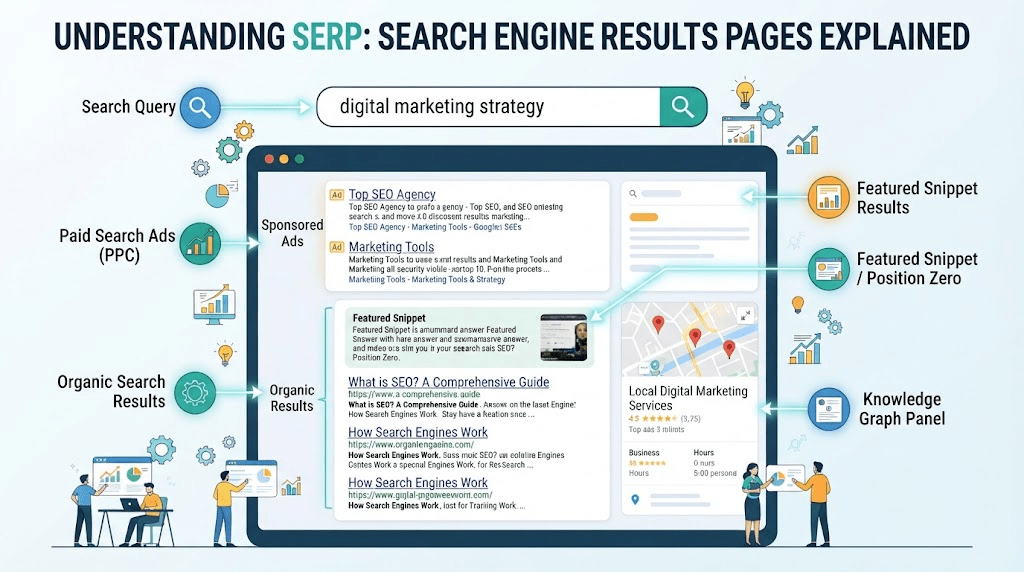
A SERP is the page you see after typing a search query into a search engine like Google. Its main job is to answer your question quickly and accurately. In the early days of the web, search results were simple lists of plain text links. Today, a modern SERP includes images, video clips, maps, shopping ads, and direct answers. Every result on the page aims to make finding information easier for the user.
Why SERPs Matter for Online Visibility
If you run a website or an online store, appearing on the first SERP is critical for success. Most people never click past the first page of search results when looking for information. When your pages rank near the top, more visitors find your site without you having to pay for advertisement clicks. Strong visibility on a SERP builds immediate trust with your audience because people naturally trust top-ranked pages.
How Search Engines Build the Results Page
Before a search engine shows you a SERP, it completes three major steps behind the scenes: crawling, indexing, and ranking. First, automated programs called crawlers scan web pages across the internet to discover content. Next, the search engine indexes those pages by storing and organizing the information in a massive database. Finally, complex algorithms analyze hundreds of factors—like content quality and user intent—to arrange the final page layout.
The Anatomy of a Modern Search Result
Every standard listing on a SERP contains three main parts that help users decide where to click. The top line shows the web address or URL breadcrumb so you know where the link leads. Below that is the clickable blue title tag, which summarizes the core topic of the page. Under the title, you will find a short description called a meta snippet that gives a quick preview of the page content.
Organic vs Paid SERP Listings
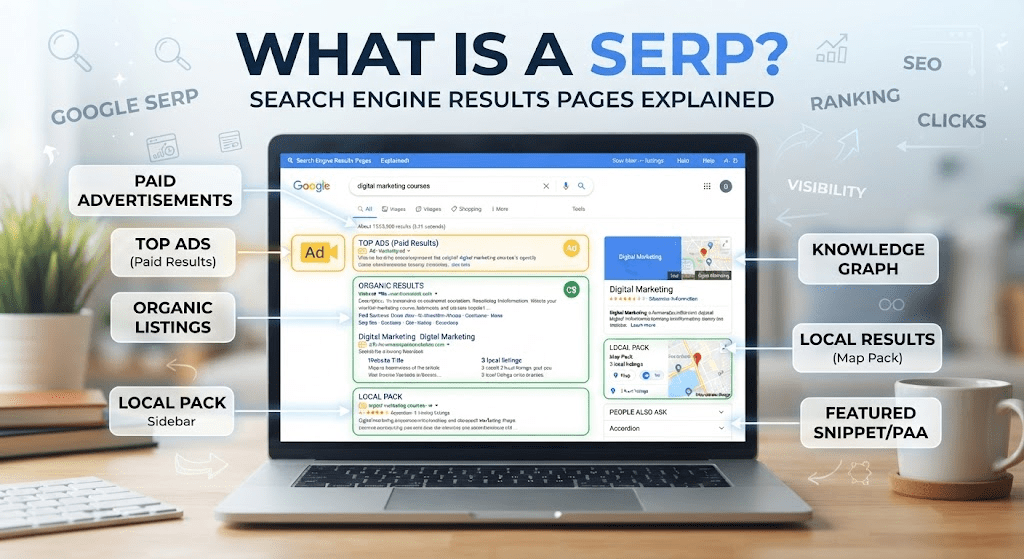
A typical SERP contains two main types of entries: organic listings and paid advertisements. Paid listings usually appear at the very top or bottom of the page and feature a small “Sponsored” tag. Businesses pay search engines every time someone clicks on these ad links. Organic listings appear based purely on content merit and SEO efforts, meaning webmasters do not pay the search engine for those positions.
Popular SERP Features You Need to Know
Search engines frequently enhance results pages with rich elements called SERP features to deliver faster answers. The Knowledge Panel displays detailed summaries about famous people, brands, or places on the side of the page. Local Packs display a map alongside business locations when you search for nearby services like restaurants or plumbers. Meanwhile, Image and Video Carousels highlight rich visual content directly inside the main feed.
Understanding Featured Snippets and Direct Answers
A featured snippet is a special highlight box located at the top of organic results, often called position zero. Search engines extract short text passages, tables, or bulleted lists directly from web pages to answer a search question instantly. Winning a featured snippet boosts your website traffic significantly because your link stands out visually above standard search entries.
How AI Overviews Are Changing Search Results
Search engines now use artificial intelligence to generate helpful summary boxes right at the top of the SERP. These AI-generated summaries gather key insights from multiple websites simultaneously to answer multi-part questions. Content creators who publish accurate, original, and deeply helpful guides are far more likely to be cited inside these advanced search summary blocks.
Key Factors That Influence Your SERP Ranking
Search engine algorithms evaluate many different signals to decide which pages deserve top placement on a SERP. High-quality content that answers searcher intent clearly remains the single most critical factor. Additionally, website loading speeds, secure connections, mobile compatibility, and quality backlinks from authority sites play massive roles in pushing your pages toward the top rank.
Smart Strategies to Improve Your SERP Positions
Improving your ranking on any SERP requires consistent effort and smart content planning. Start by researching relevant search keywords that match what your target audience actively types online. Write clear, easy-to-read articles that answer those queries better than existing pages do. Finally, update your existing content regularly to keep information fresh, accurate, and valuable for human readers.
Search Engine Results Pages Overview
| Detail Category | SERP Information |
| Full Form | Search Engine Results Page |
| Primary Goal | Display the most relevant answers for user search queries |
| Main Components | Organic listings, paid ads, SERP features, AI Overviews |
| Key Ranking Factors | Relevance, quality content, backlinks, page speed, mobile setup |
| Top SERP Features | Featured snippets, local pack, image carousels, People Also Ask |
| Primary SEO Goal | Higher organic rankings and improved click-through rate (CTR) |
Frequently Asked Questions
What does SERP stand for in digital marketing?
SERP stands for Search Engine Results Page. It is the page displayed by search engines after a user enters a search query.
Why is ranking on the first page of a SERP so important?
Most web searchers click on the top three organic results on page one. Higher rankings mean more organic traffic, better brand visibility, and higher credibility.
What is the difference between organic results and SERP features?
Organic results are regular web links ranked by quality and relevance. SERP features are special visual blocks—like maps, image sets, or answer boxes—added by search engines to give immediate answers.
How do search engines decide what appears on a SERP?
Search engines use complex algorithms to analyze web pages based on relevance, content authority, page speed, mobile-friendliness, and user experience.
Can I pay search engines to rank higher in organic SERP results?
No, you cannot pay for organic positions. You can only pay for sponsored ad slots, which are marked separately from natural organic listings.
What is a featured snippet on a SERP?
A featured snippet is a highlighted summary box at the top of search results that directly answers a query using text pulled from a high-ranking web page.
Ranking well on any SERP takes time, patience, and high-quality content that puts readers first. Focus on creating clear, helpful guides that answer user questions directly and thoroughly. As your site gains trust and authority, your pages will naturally rise to the top of search engine results pages.