Introduction to the Arroba
Have you ever wondered about that funny little curly symbol you type every time you send an email? It looks like a little snail sitting in its shell, and it is called the arroba. You probably use it all the time on your phone or computer, but have you ever stopped to think about where it came from? Long before computers were invented, this little sign was already busy helping people. It has a super cool history that goes back hundreds of years. Today, we see it in email addresses, social media handles, and online chats. But it did not start out as a tech tool at all. It started as a simple way for merchants to count things! Understanding the arroba helps us see how old ideas can find new life in the modern digital world. Let us dive in and explore the fascinating journey of this famous little mark.
What is an Arroba?
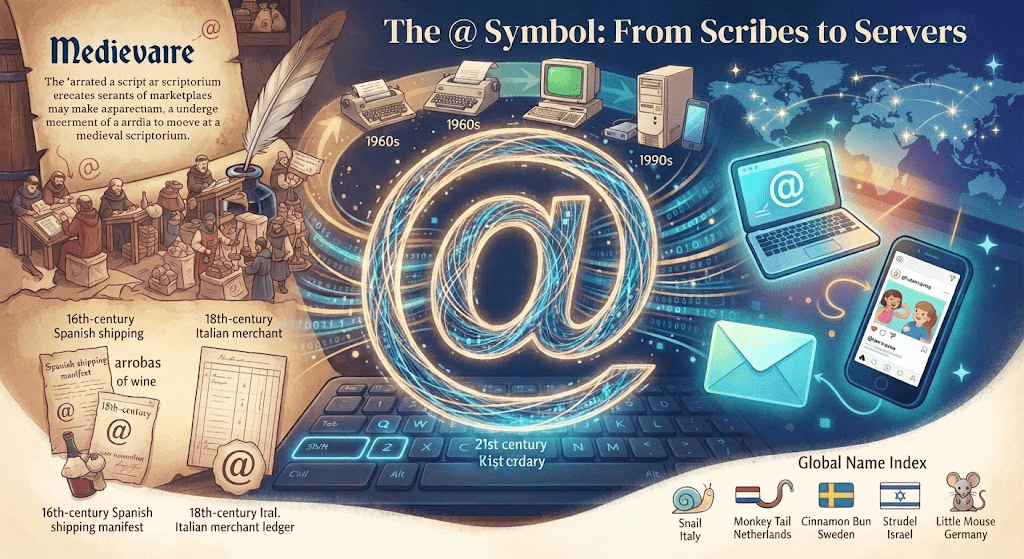
The arroba is a symbol that looks like an “a” wrapped inside a little circle. In English, most people just call it the “at” sign. But in Spanish and Portuguese, it keeps its traditional name, which is arroba. This word comes from an old Arabic term that meant a quarter. Back in the old days, it was used as a unit of measurement for weight and volume. Merchants would write it down in their ledger books to show how much wine, grain, or oil they were selling. It was basically a quick shortcut for busy traders. Instead of writing out a long word every time, they drew this clever little loop. Over time, people forgot about its old job as a weight measurement. But the shape survived because it was so easy and fast to write by hand.
The Early History of the Symbol
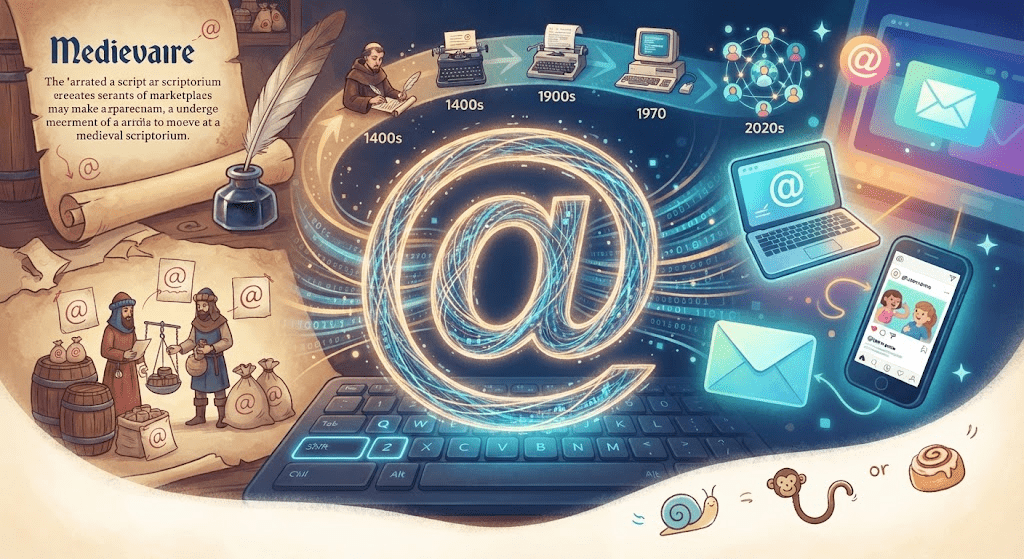
To really understand the arroba, we have to travel back in time to the Middle Ages. Monks and scribes were always copying books by hand using quill pens. Writing long words took a lot of time and used up a lot of expensive ink. To save space, scribes started mashing letters together to create shortcuts. They took the Latin word “ad,” which means “at” or “toward,” and looped the letters “a” and “d” together. The tail of the “d” curved around the “a” to form a protective little circle. This made writing much faster. Soon, merchants all over Europe started borrowing this trick for their shipping receipts and business papers. It was an early way to keep things simple and organized. Even though the spelling and languages changed, the handy shape stayed popular among people who traded goods.
The Arroba as a Unit of Measurement
Before it became a star of the internet, the arroba was a serious heavy lifter. In Spain, Portugal, and the Americas, it was an official standard weight. One arroba was usually equal to about twenty-five pounds, which is roughly eleven kilograms. It could also measure liquid volumes like olive oil or wine. If a farmer went to market to sell five sacks of flour, the clerk would record it using the arroba sign to save time. It helped everyone agree on how heavy a load was without any confusion. Think of it like using pounds or kilograms today. Even though digital technology took over, older generations in some countries still remember using the term in everyday trade. It proves that symbols can change their jobs completely over the centuries.
The Transition to the Typewriter
When typewriters were invented in the late 1800s, manufacturers had to decide which keys to include. They wanted to make machines that business workers could use as fast as possible. Because the arroba was already super common on merchant invoices and shipping bills, it earned a spot on the keyboard. It was usually grouped right up there with the numbers and punctuation marks. Back then, typists used it to mean “at the rate of.” For example, an invoice might say that a store bought ten boxes of apples arroba two dollars each. It stayed a quiet, boring business key for nearly a century. Most kids playing on typewriters ignored it completely. Little did anyone know, this humble key was just waiting for its moment to rule the digital world.
Ray Tomlinson and the Email Revolution
Everything changed for the arroba in the year 1971. A brilliant computer engineer named Ray Tomlinson was working on a project called ARPANET, which was the early grandfather of the internet. He needed a way to send messages between different computers. The big problem was figuring out how to tell the system who the message was for and which computer machine they were using. He looked down at his Teletype model 33 keyboard and spotted the lonely arroba symbol. It was hardly ever used in computer code, making it the absolute perfect choice to separate a username from a computer name. He typed his very first network message using the sign, linking a person to a place. That single stroke of genius turned an old measuring mark into the ultimate connector of the digital age.
The Arroba Around the World
One of the coolest things about the arroba is how many different names it has across the globe. While English speakers call it the “at” sign, other countries got super creative. In Spanish and Portuguese speaking regions, it proudly remains the arroba. But in other places, people looked at its funny shape and saw animals or food! In Dutch, people call it a “monkey tail.” In Swedish, it is known as a “bun” or a ” cinnamon roll.” Germans sometimes call it a “hanging spider,” while Italians see a “snail.” In Russian, it is often called a “doggy.” No matter what language you speak or what cute nickname you give it, everyone instantly recognizes this curly shape. It proves that the internet has created a universal language of symbols that brings people all around the world together.
Complete Detailing Biography Table
| Category | Detail / Fact | Description |
| Name | Arroba | The official historical and cultural name for the @ symbol in Spanish and Portuguese. |
| Origin | Medieval Scribes | Created by monks and merchants combining the Latin letters “a” and “d” for speed. |
| Old Purpose | Weight Unit | Used historically as a standard measure for goods, weighing about 25 pounds. |
| Typewriter Era | Business Key | Added to keyboards in the late 19th century to mean “at the rate of” for invoices. |
| Tech Hero | Ray Tomlinson | The computer engineer who chose the symbol for email routing in 1971. |
| Global Names | Snail, Monkey Tail, Cinnamon Bun | Fun nicknames given to the symbol based on its unique curly appearance worldwide. |
Modern Uses in Social Media and Tech
Today, the arroba is a total rockstar in the digital universe. You cannot scroll through your favorite apps without seeing it everywhere. On platforms like social media, it is used to tag friends or mention specific accounts. When you want to grab someone’s attention in a comment or post, you drop an arroba right before their username. It sends them a direct notification so they never miss your message. Programmers also use it inside computer coding languages to write special instructions and manage data structures. It is amazing to think that an ancient symbol used for weighing sacks of flour is now the beating heart of global social communication. It connects billions of humans every single day in the blink of an eye.
Fun Facts About the Arroba
Did you know that the arroba has its very own official spot in digital character codes? It is assigned the code number 64 on standard keyboards. Also, because it is so popular, typography designers spend hours making sure it matches the style of every new font they create. In France, a special campaign tried to banish it from official documents, but people loved it too much to let it go. Another fun fact is that the symbol even appears in famous art pieces and museum exhibits dedicated to the history of communication. People love learning that their modern text messages share a direct link with medieval marketplace merchants. It is a tiny piece of history that lives right inside your pocket phone.
Conclusion
The humble arroba has traveled an incredible journey through human history. From a simple handwritten shortcut used by medieval monks to a heavy-duty unit of measurement for merchants, it has always been about making life easier. Thanks to clever inventors and the magic of email, this little curly mark found its true home in the digital age. Now, it connects friends, powers social media, and helps us navigate the online world every single day. Next time you type an email address or tag a buddy online, take a quick second to smile at your little snail friend. What is your favorite way to use this famous symbol in your daily chats? Drop a comment or share this article with a friend to keep the conversation going!
Frequently Asked Questions
1. What does arroba mean?
The word arroba refers to the @ symbol. Historically, it was an old measurement of weight for goods like wine and grain. Today, it is mostly used in email addresses and social media handles.
2. Who invented the @ symbol for email?
An engineer named Ray Tomlinson chose the arroba symbol in 1971 to separate usernames from computer names when sending the very first network messages.
3. Why do different languages call it different things?
People look at the curly shape of the arroba and see different everyday objects. For example, some languages call it a snail, a monkey tail, or even a cinnamon roll!
4. Was the arroba used before computers?
Yes! Long before computers existed, medieval scribes and business merchants used the arroba symbol as a quick shortcut for writing trade receipts and measurements.
5. How do you type the arroba symbol?
On a standard computer keyboard, you can easily type the arroba symbol by holding down the Shift key and pressing the number 2 key.
6. Why is the arroba so important today?
The arroba is essential because it acts as a digital bridge. It connects email accounts to servers and allows us to tag and mention friends on social media apps instantly.